
The Parroting Trap: Why Owners Think Their Managers Have a Plan (And Why They Usually Don't)
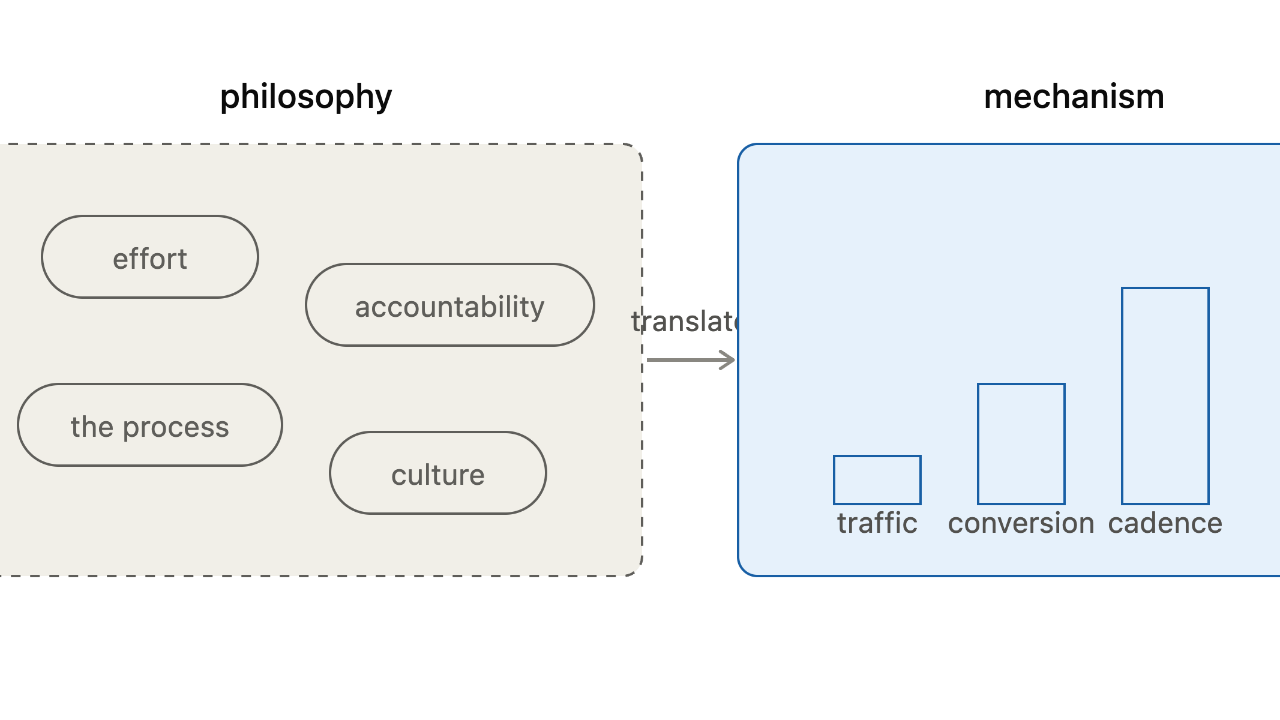
Every owner has had this moment: you ask a manager how things are going, and they say all the right words back to you. Accountability. Effort. Staying true to the process. We're pushing hard. You nod, satisfied, and move to the next store, the next call, the next fire. Weeks later the numbers haven't moved, and now you're frustrated — not with yourself, but with the "low performer" who apparently couldn't execute a plan that, in hindsight, never actually existed.
This is the parroting trap, and it's one of the most common — and least discussed — failure modes in owner-manager relationships.
What Parroting Actually Is
Parroting isn't lying. It's not even incompetence, most of the time. It's a manager reflecting the owner's own language back at them — the vocabulary of accountability without the mechanics of it. "We need to hold him accountable" sounds like a plan. It isn't one. It's a sentiment wearing the costume of a plan.
The tell is almost always the same: the language stays abstract. Effort. Mindset. Culture. Process. These words feel like substance because they're the right words — the ones the owner has used a hundred times themselves. But abstraction is not a strategy. A manager can say "we're going to hold him accountable" in every single check-in for six months and never once produce a number, a behavior, or a mechanism that makes that sentence true.
Owners often can't tell the difference in the moment, because fluent, confident language feels like competence. That's not a character flaw — it's a well-documented cognitive shortcut. People consistently mistake how easily an answer comes to someone for how correct or well-thought-out that answer actually is. A manager who answers smoothly and echoes the owner's own framing triggers that shortcut every time.
Why Owners Let It Slide
A few forces make this trap easy to fall into, and they're worth naming honestly:
- Time scarcity. Owners are usually managing five fires at once. A fluent answer is a fast answer, and fast answers get accepted so the conversation can move on.
- Conflict avoidance. Pushing past a manager's first answer can feel like an accusation — like you're saying "I don't believe you." Most owners would rather assume competence than risk that friction.
- The principal-agent problem. This is a well-established concept in economics: whenever one person (the manager) is acting on behalf of another (the owner) but has their own incentives, the agent will naturally optimize for looking good to the principal rather than fully disclosing reality — unless the system specifically rewards candor and specificity over polish.
- Nobody trained them to ask. Most owner-operators were promoted because they were excellent salespeople or operators, not because anyone taught them how to interrogate a plan. Telling is a skill people pick up naturally. Asking — in a structured, repeatable way — is not.
The Shift: Philosophy vs. Mechanism
The fix isn't a better speech about accountability. It's a habit of refusing to accept philosophy as a substitute for mechanism, in real time, without turning it into an interrogation.
In a recent check-in, the pattern showed up almost perfectly — and so did the way out of it. A manager was describing a low-performing employee: "he needs to stay true to the process," "we gave him a push," "effort is up." Every one of those statements is philosophy. None of them, on their own, is verifiable, repeatable, or falsifiable.
What moved the conversation from philosophy to mechanism wasn't correction — it was a specific sequence of moves:
- Ask "what does that mean" and mean it literally. Every abstract word — effort, process, push — got a follow-up asking for the behavior underneath it. Not as a gotcha, but as genuine curiosity: what does that actually look like on the floor?
- Demand the observed instance, not the summary. "Did he do that yesterday? Did you watch him do it?" turns a general claim into a specific, checkable event. A manager who watched it happen can describe it. A manager who's summarizing a vibe usually can't.
- Bring an analogous model instead of an instruction. Rather than telling the manager what to track, the conversation introduced a parallel structure from a completely different world — cold-calling conversion rates — and let the manager map his own situation onto it. This does something a directive can't: it makes the manager the author of the plan, not the recipient of one.
- Do the math together, out loud. Turning vague optimism into an actual number — traffic per day, conversion rate, average transaction size — forced the abstraction into something falsifiable. Once the manager was doing the arithmetic himself, the plan stopped being borrowed language and became his own.
- Let the manager say the plan back in his own words, with a number and a cadence attached. The conversation didn't end until there was a specific mechanism — daily traffic count, daily conversion tracking, a recurring update to the team — that the manager had proposed, not one that had been handed to him.
Notice what's absent from all five moves: no lecture, no scripted answer, no correcting the manager's philosophy. The owner never told the manager what "accountability" should mean. He just kept asking what it did mean, until the manager had no choice but to build something real.
Why This Matters More Than It Seems
The real cost of the parroting trap isn't a single bad quarter. It's that the owner walks away from every check-in believing the org has a plan, when what it actually has is a shared vocabulary. Then, when the low performer doesn't improve, the frustration lands on the employee — when the actual gap was two levels up, in a check-in that accepted fluent language as a finished strategy.
Action Items
- Install a "translate it" rule. Any time a manager uses an abstract word — effort, accountability, culture, process — the next question is automatic: what does that look like, specifically, and when did you last see it happen?
- Require a number and a cadence before the conversation ends. A plan without a metric and a check-in rhythm isn't a plan; it's an intention.
- Use analogies, not orders, to build the plan. Offering a parallel model from another domain and letting the manager map it onto their own world produces ownership that a direct instruction never will.
- Separate "traffic problems" from "conversion problems" explicitly. Managers — and their direct reports — need to know which numbers are actually within their control, or they'll default to blaming circumstances instead of building a mechanism.
- Praise the specific behavior, not the general trend. "Good job this week" reinforces nothing. "I saw you go back for the second sock conversation after the first no — that's the behavior we want" reinforces the exact mechanism you're trying to build.
- Treat fluency as a yellow flag, not a green light. The smoother and more familiar an answer sounds, the more it's worth one more "what does that mean" before moving on.
The goal isn't to distrust managers. It's to build a habit — for both owner and manager — of noticing the moment a conversation is still in the language of philosophy, and gently, consistently, pulling it down into the language of mechanism before the meeting ends.
SUBSCRIBE FOR MONTHLY TIPS AND TRICKS!
Great Mann Group content, right to your inbox.
We hate SPAM. We will never sell your information, for any reason.
