
From Hoping to Knowing: Why Specialty Run Retail Can't Sell Apparel
Women's Wear Daily just published its list of the highest-paid CEOs in fashion. Number one wasn't a designer or a couture house. It was Elliott Hill, CEO of Nike.
Nike. The shoe brand.
Except Nike isn't really a shoe brand, and hasn't been for a long time. In any given year, Nike or Adidas may sell more apparel than any company on earth. Lululemon didn't just enter the athletic wear category, it redefined what “active apparel” means to an entire generation of consumers.
Meanwhile, specialty run retail, the stores closest to the runner, the ones with the real relationship, sits at roughly 8% of total sales from apparel. Anecdotal, but consistent across the accounts I work with.
I don't think that number is an accident, and I don't think it's a category problem. I think it's a management problem. Specifically, it's what I call Hope Management: running the apparel side of the business on optimism instead of on a system.
Hope Management vs. Causal Management
Hope Management sounds like this: “We hope apparel does better this season.” “We hope the new buy resonates.” “We hope customers notice we changed things up.”
It's not a strategy. It's the absence of one…a bet placed and then left alone to see what happens.
Causal Management is the opposite. It asks: what has to be true, and what do we have to do on purpose, for this result to happen? Applied to apparel, that reframes all six of the usual excuses retailers give for weak apparel sales. They aren't really explanations. They're symptoms of hoping instead of causing.
Six Places Retailers Are Hoping Instead of Causing
- The buy.
Causal buyers are in the market constantly; watching, researching, trying things on, talking to reps, not building assortments from behind a spreadsheet once a quarter. You cannot build an apparel business around five-inch split shorts. That's not an apparel assortment; it's a single SKU with a few color ways.
- The lifestyle layer.
Runners and walkers are passionate about their identity as runners and walkers, not just their performance splits. Causal retailers stock the hoodie, the tee, the mug, the things a customer wears when they're not running, that still say “this is who I am.” Hope Management skips this because it doesn't show up on a performance spec sheet.
- Turn frequency.
Walmart turns its entire store roughly eight times a year, on purpose, which is a large part of why customers come back regularly. The run industry averages a customer visit every 270-plus days. Pair that already-slow cadence with apparel inventory turning at 1.8 times a year or worse, and the store looks frozen in time every time that customer finally does walk back in. Causal retailers target four-plus turns in apparel and keep pushing from there, on purpose.
- The staff.
Technical apparel doesn't sell itself off a hanger. It's built to be seen on a body, in motion. Causal retailers make it non-negotiable that staff wear what's on the wall, every shift. “I love what you're wearing!” only works as a selling line when it's true and immediate: “Thank you — it's right over here, in four colors.”
- The fixtures.
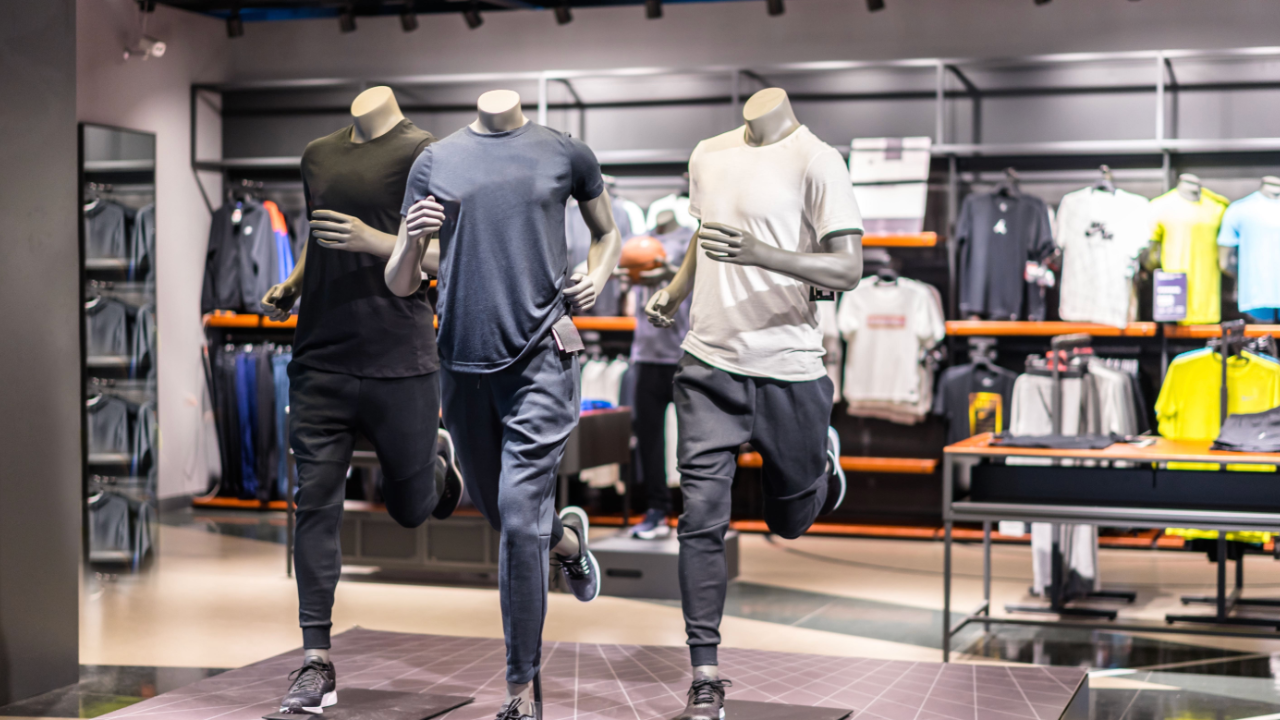
Most run stores are fixtured for shoes, not apparel. Technical pieces need mannequins and flat-fold presentation to show their features and fit. Lululemon and Athleta didn't stumble into this, it's deliberate, causal merchandising design, not an afterthought bolted onto a shoe wall.
- “Testing.”
In Hope Management, “test” is code for “I'll place a small order and see.” A real test, the kind a pharmaceutical company runs before a launch, involves measurement, documentation, and people paying close attention on purpose. A six-unit buy with no plan to measure sell-through isn't a test. It's an alibi for not committing.
The Real Diagnosis
Specialty run retail doesn't have an apparel problem. It has an intention problem. Every one of the six issues above is fixable, but only by a store willing to manage the category intentionally instead of hopefully.
The stores winning at apparel right now aren't lucky, and they aren't secretly better merchants than you. They're just causal, about the buy, the merchandising, the staff, and the follow-through, while the rest of the industry waits to see what happens.
What would change in your store if you managed apparel causally instead of hopefully?
Dan Mann is the founder of The Mann Group, a sales training and organizational development consultancy for specialty run, outdoor, and bike retailers, and author of Leading Change.
SUBSCRIBE FOR MONTHLY TIPS AND TRICKS!
Great Mann Group content, right to your inbox.
We hate SPAM. We will never sell your information, for any reason.
